

This review contains spoilers.
You have been warned.
You have also been warned to stay far away from this film.
Have you ever watched a good film and thought “you know what would make this better? More brutal rape scenes and a cast of characters with no redeeming qualities”? No. Of course you haven’t, because you know the fine line between tearjerking and traumatic to watch.
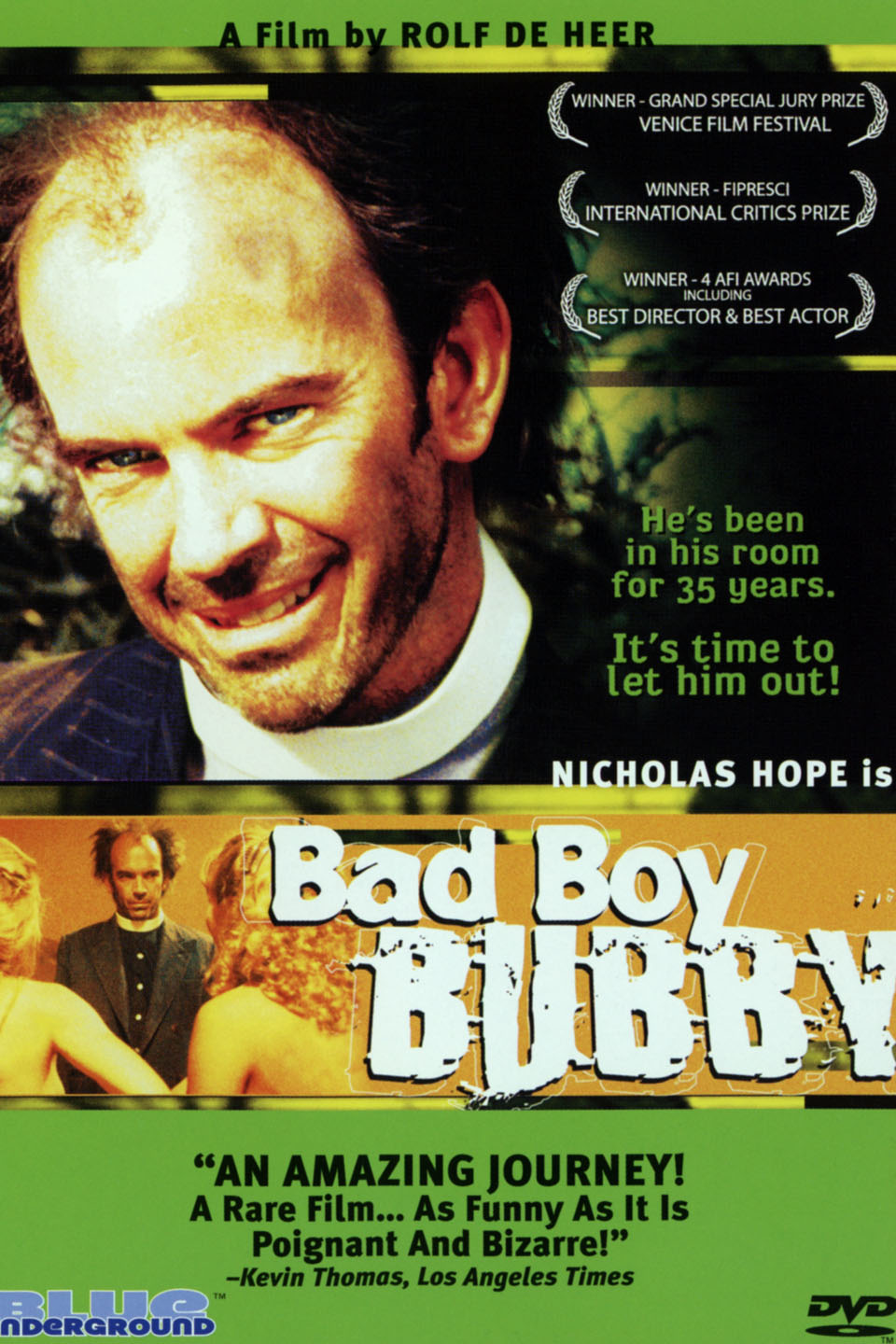
The South Australian film scene has really upped its game in recent years, being the setting for critically acclaimed films such as The Babadook and Snowtown. In such a beautiful expansive landscape and vibrant bustling city, it’s no wonder that Adelaide is edging its way onto the map of cinephiles and directors with an eye for creativity. It is for this reason among others that the shallow grave that this obscure piece was left in should be left there for much longer. Bad Boy Bubby gave cinema-goers the chance to step into Port Adelaide circa 1993 and despite the convertibles, pubs and nightlife which disappeared into the background, the film instead chooses such a beautiful and historic location to be expanded upon after the protagonist (if one could call him that) Bubby is shown in his natural habitat, a dingy apartment where he kills cats as a result of lies told to him by his mother. His mother serves as the lead central antagonist to the film although she holds him down less like the typical villain and more akin to a Freudian interpretation of satan. Having stagnated her son mentally by keeping him locked away for thirty five years, his mental deterioration is furthered by her constant mental, physical and sexual abuse which reaches something of a pinnacle twenty minutes into the film upon the arrival of Bubby’s biological father who turns out to be cut from the same cloth as his mother.
Bubby flees.
From here on out, the film twists its twisted face to the audience and sticks out its tongue which is adorned with a montage of disgusting antics, most of which test the stomachs of the strongest all for the sake of shock value.
The arc of the film and the redemption story of a deranged sociopathic manchild begin to focus on his cult-status as a singer reminiscent of something you might hear faintly on a Pink Floyd record or a Death Grips track.
Just when you think the train-wreck cannot get worse another train descends from the skies and adds to the carnage. His relationship with a carer for the disabled (that bares a striking resemblance to his mother, touched upon heavily in the dialogue) perfectly encapsulates what this film is about: destroying any chance of Adelaide’s future with the film industry and taking with it my respect for the one good actor in the film – Nicholas Hope in his portrayal as Bubby. I’m not sure if this man employed method acting for the calibre of his performance, but if he did, I will personally start placing my faith in a higher power just to pray for him.
Do not let the well done cinematography, meticulous set design and infallible direction coerce you into believing the high ratings online, this is not a film for the faint of heart. It is not even a film for those with a heart.
Rolf de Heer’s direction could transform a colonoscopy into a masterpiece if this work is anything to go by, but Rolf de Heer’s screenplay still pushed the limits for his directorial abilities way too far.
1/10
 Kinosaw